
By Kerry Cole, Editor of Materials Performance (MP) magazine
Artificial intelligence (AI) is making its way into coatings inspection, but industry experts say the change will be gradual — not something that happens overnight.
“Put AI in the title and people show up,” said Drayton Adkins, who spoke during Wednesday’s well-attended session titled “The Future of Coatings Inspection.”
“Inspectors want to know what’s coming,” he added.
What’s coming, according to Adkins and other panelists, is a growing use of tools such as drones, machine learning, and digital twins to support inspections. These tools can help collect more data—and collect it faster—especially in areas that are difficult or unsafe to access.
But as the technology improves, speakers said its value still comes down to the quality of the data behind it and how that data is used.
Inspection results today — especially for coatings exposed to the elements — can vary widely from one inspector to another. AI could help reduce that variability by analyzing images and tracking how coatings change over time.
Still, Adkins and session chair Nickey Zafris stressed that corrosion can look vastly different depending on the environment, so the data used to train these systems has to match real-world conditions.
“Corrosion is nuanced,” said Adkins, coatings specialist with Black & Veatch. “And nuance is something AI doesn’t do well. It’s very literal.”
Because of that, most experts expect AI to remain a tool — not a replacement — for inspectors. Human judgment will still be needed to interpret results and make final decisions.
Regulation is another open question.
Some technologies, such as remote monitoring in cathodic protection, are already accepted by regulators. But coatings inspection rules are still fairly broad. As AI makes it easier to collect more data, some in the industry wonder whether regulators will start expecting more frequent inspections and more detailed records.
Adkins, who spoke at Houston’s George R. Brown Convention Center as part of the 2026 AMPP Annual Conference + Expo, expects that shift to come slowly.
Rather than getting ahead of the technology, he said regulators will likely respond after something goes wrong.
“We’ll use these tools, make a call, and then something will happen,” he said. “Then they’ll regulate it—and probably require a human decision point.”
Lead graphic via Getty Images.
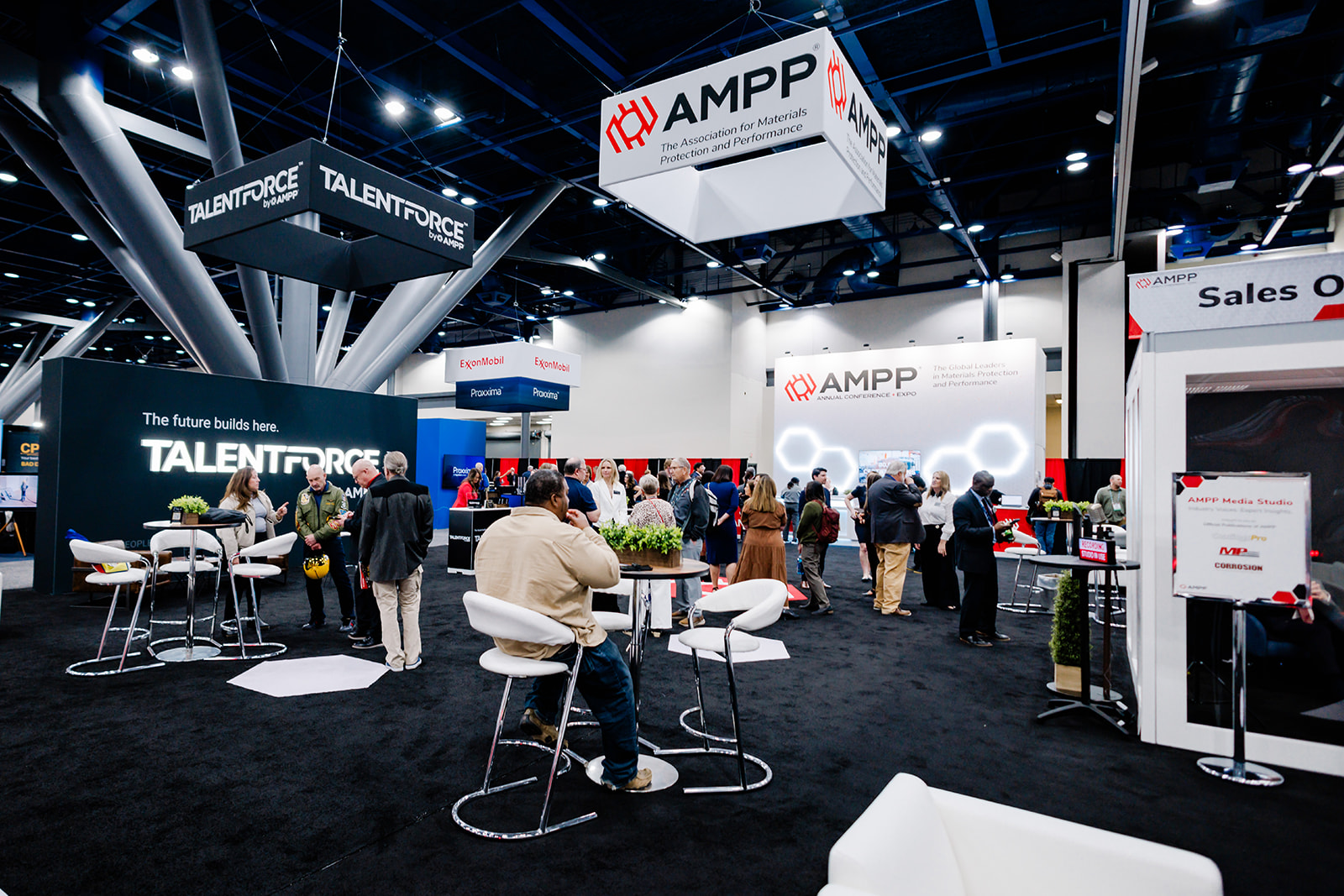 TalentForce Hosts Inaugural Workforce Development Panel at AMPP 2026
TalentForce, AMPP’s new company, held its inaugural workforce development panel on Tuesday afternoon. The discussion highlighted the need to design and update models and for programs to be more modern.
Read more AMPP Symposium Examines Direct, Hidden Costs of Corrosion
The “Economics of Corrosion: Associated Direct and Indirect Costs” symposium will explore how corrosion continues to affect asset performance, operating budgets, and long-term planning across critical industries.
Read more Go for Launch: AMPP, Proxxima Host Opening Reception in Houston
The 2026 AMPP Annual Conference + Expo began with the Opening Reception, cosponsored by Proxxima and AMPP. With thousands of delegates expected over the coming days, Sunday’s event set the tone for a week of meaningful dialogue and conversations between industry leaders and key stakeholders.
Read more