

By Kerry Cole, Editor of Materials Performance (MP) magazine
Sustainability in the corrosion industry should be understood through durability and long-term performance—not just carbon metrics—according to a speaker at a Sustainability Task Force forum held at the 2026 AMPP Annual Conference + Expo on Tuesday.
“Sustainability in our industry is about designing, protecting, and maintaining infrastructure that remains safe, serviceable, and resource-efficient over its service life—preserving the built environment for future generations,” said Raed El Sarraf, session chair.
El Sarraf emphasized that corrosion prevention is inherently aligned with sustainability goals because it extends asset life, reduces material waste, and helps avoid premature failures. These contributions span environmental, economic, and social pillars, including reduced resource use, lower lifecycle costs, and improved safety and reliability.
At the same time, he cautioned against an overly narrow focus on carbon reduction as the primary measure of sustainability.
“We need to get away from the myopic view that carbon is the only measure,” El Sarraf said. “Focusing only on carbon can lead to decisions that increase waste, cost, and emissions over time.”
Instead, he encouraged a broader lifecycle perspective when evaluating materials and corrosion management strategies.
“The most sustainable solution isn’t always the one with the lowest upfront carbon—it’s the one that delivers longer life, safer operation, and better performance over the asset’s life,” he said.
That challenge often plays out in real-world project decisions, where cost and schedule pressures can outweigh long-term performance.
“The way we evaluate projects tends to incentivize near-term savings,” said Peter Ault of KTA-Tator. “If we want sustainability, we need systems that emphasize life-cycle value instead.”
Florent Bocher, director of research and program innovation standards at AMPP, reinforced that message, noting that the industry has long contributed to sustainability—even before the term became widely used.
“If materials don’t degrade, you don’t have to rebuild, use new materials, or expend more energy—that’s sustainability by default,” Bocher said.
Bocher added that AMPP is working to more intentionally integrate sustainability across its activities—from standards and technical programming to education and outreach. That includes aligning efforts with the United Nations Sustainable Development Goals and helping members better apply tools such as life cycle assessment.
“We need to make sure the next generation is trained to use these tools and contribute at the design stage,” Bocher said. “That’s where the biggest impact happens.”
 AMPP Honors Next Generation at Scholarship Awards, EMERGing Leaders Bash
The Scholarship Awards featured BP as its signature sponsor, while the Emerging Leaders Bash had Sherwin-Williams as its signature sponsor and the International Union of Painters and Allied Trades (IUPAT) and the AMPP Arizona Chapter as copper sponsors.
Read more CoatingsPro Magazine, Master Painters Institute to Present 2026 Awards
 Join the celebrations as CoatingsPro Magazine and the Master Painters Institute (MPI) present the 2026 winners of their respective awards programs! The announcements will be made on Tuesday, March 17, inside the Exhibit Hall at the Student Poster Session stage.
Read more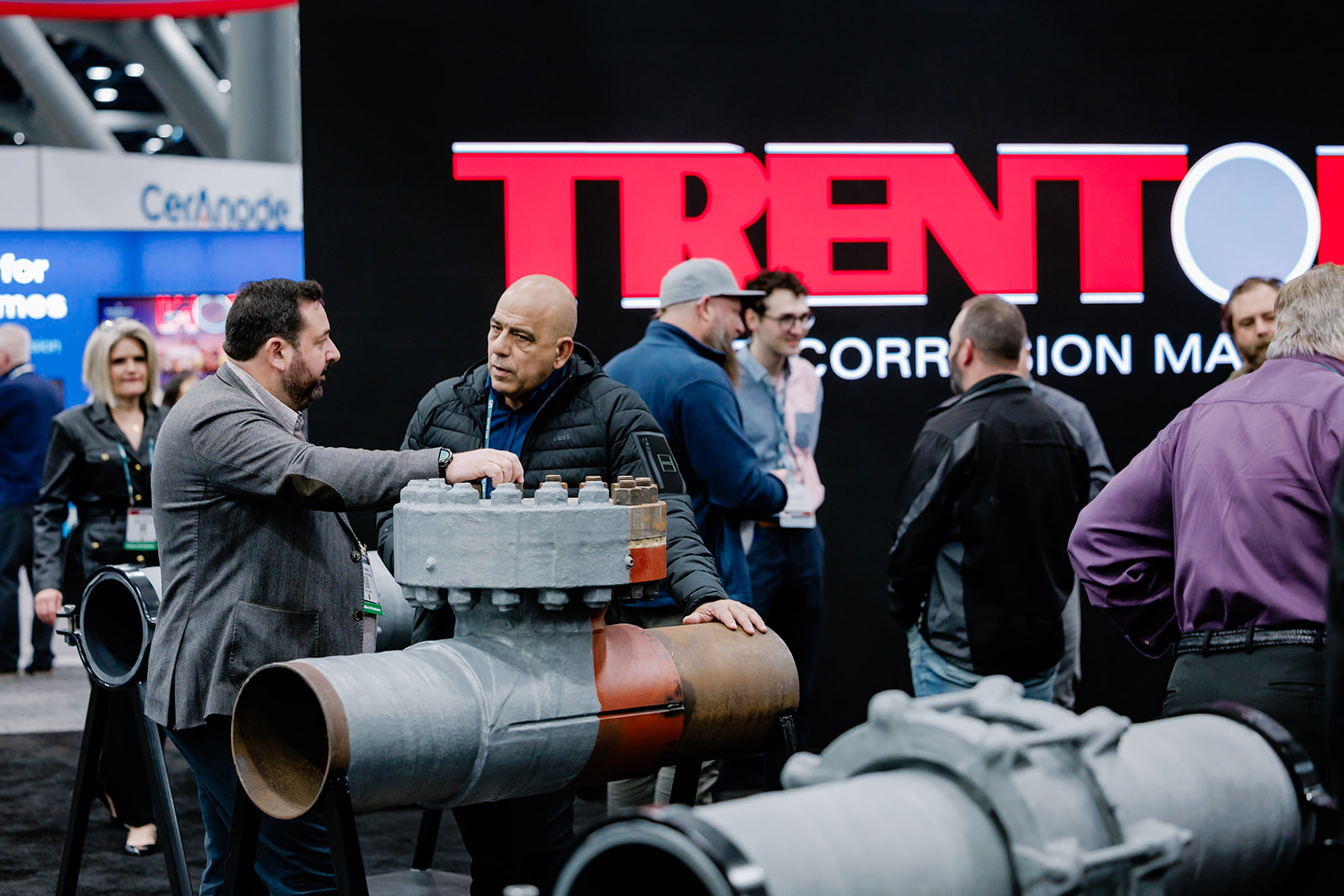 Exhibit Hall Is Open for Business at AMPP 2026
The Exhibit Hall at the 2026 AMPP Annual Conference + Expo is now open! The ceremonial ribbon cutting by Alan Thomas, CEO of AMPP, took place on Monday afternoon inside Houston’s expansive George R. Brown Convention Center.
Read more