

By Kerry Cole, Editor of Materials Performance (MP) magazine
As corrosion programs become increasingly data-rich, the industry is being forced to grapple with how to manage, interpret, and apply complex datasets in ways that support sound engineering decisions.
Those issues will be addressed during “Data Challenges in Corrosion,” a Sunday morning technical session during the 2026 AMPP Annual Conference + Expo. The presentations will take place from 9:00 a.m. to noon in Room 362 DE.
Chaired by Corey Mitchell of Entrust Solutions Group, with Hui (Jack) Wang serving as vice chair, the session is designed to create what Mitchell describes as “a dynamic environment where industry experts can share their insights, exchange best practices, and collaborate on finding innovative solutions to the data challenges posed by corrosion data.”
Mitchell says discussions will focus on “how the corrosion industry is adapting to rapidly evolving data ecosystems — particularly the challenges of data quality, integration, interpretation, and deployment at scale.” Presenters will explore practical applications of cloud-based platforms, machine learning–assisted diagnostics, advanced sensing technologies, and predictive modeling frameworks.
Presentations will include a cloud-based approach to the corrosion control industry, development and implementation of corrosion management strategies at crude processing facilities, and the use of passive radio frequence identification corrosion sensing to improve Department of Defense asset management. The session will conclude with a presentation on applying machine learning to detect and manage corrosion under insulation (CUI).
Mitchell emphasized that the goal is not technology for technology’s sake.
“Data-driven tools are advancing faster than the frameworks used to apply them,” he says. “As a community, we must ensure that new analytical capabilities complement rather than replace sound engineering judgment.”
The session is expected to benefit corrosion and materials engineers, integrity and inspection professionals, data scientists, asset owners, and regulators. Ultimately, Mitchell hopes attendees leave with “the confidence and technical context needed to integrate data-driven approaches into robust, defensible corrosion management programs.”
 Tuesday’s Panel Explores Challenges, Opportunities of Maritime Ecosystem
The AMPP TC04 Marine Technical Community of Interest (TCI) is bringing together commercial shipowners, classification societies, government, and workforce innovators in a session to explore the technologies, workforce initiatives, and policy drivers shaping the future of marine fleet readiness.
Read more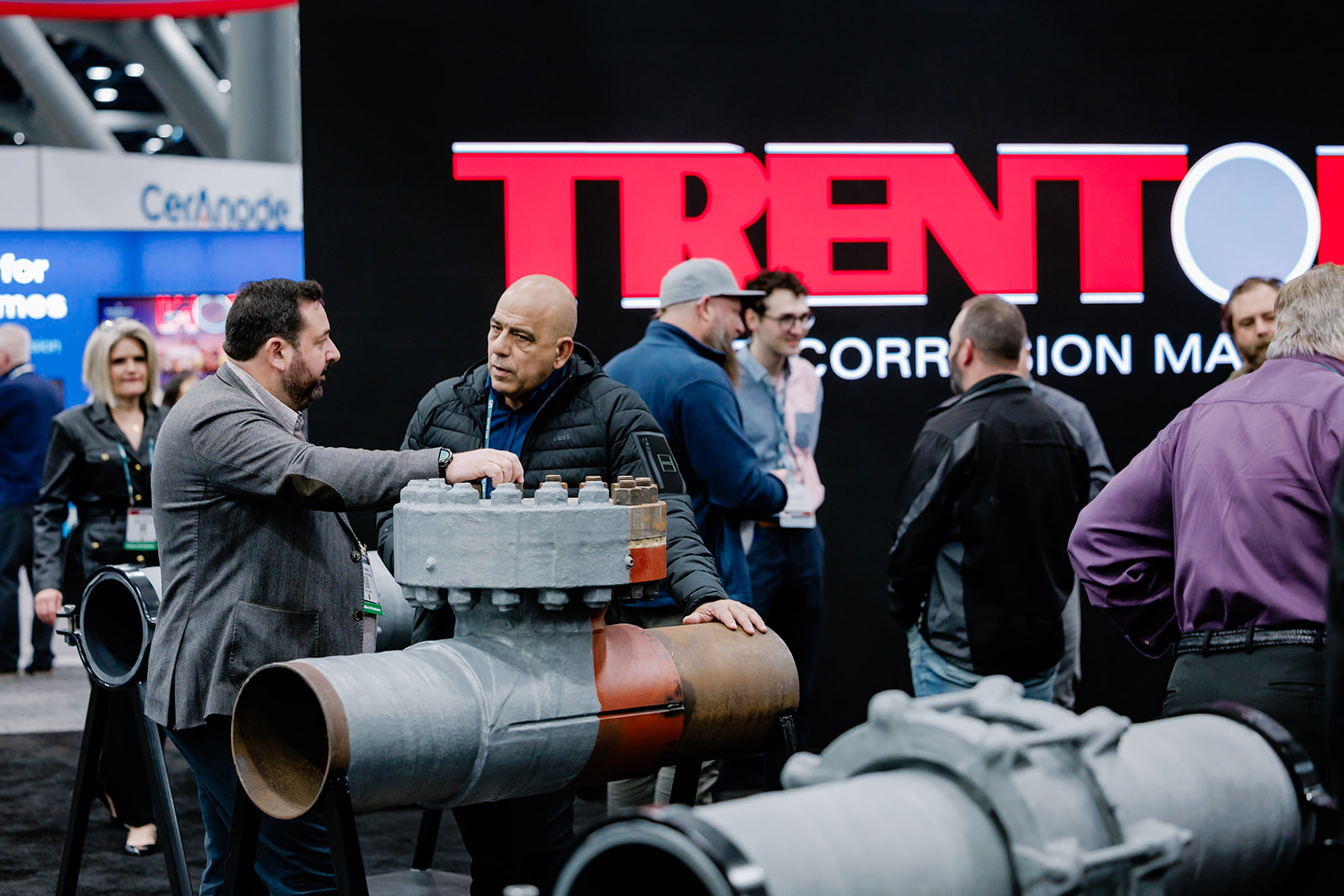 Exhibit Hall Is Open for Business at AMPP 2026
The Exhibit Hall at the 2026 AMPP Annual Conference + Expo is now open! The ceremonial ribbon cutting by Alan Thomas, CEO of AMPP, took place on Monday afternoon inside Houston’s expansive George R. Brown Convention Center.
Read more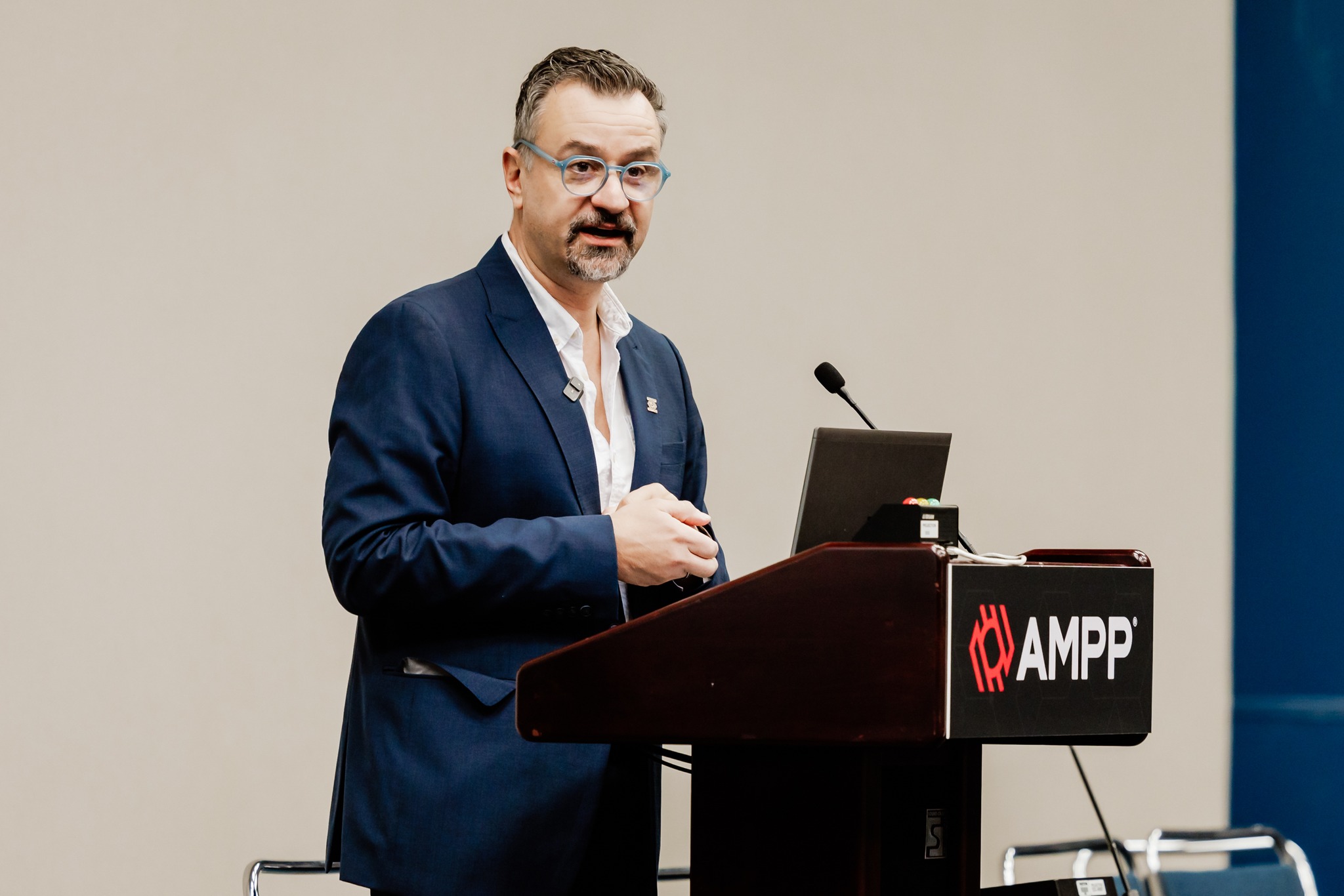 Dr. Nick Birbilis Delivers AMPP’s 2026 Whitney Award Lecture
In a presentation titled “Toward Sustainable Corrosion Resistant Alloys,” Dr. Nick Birbilis delivered his 2026 Whitney Award lecture regarding the role of grain size, grain orientation, and crystallinity on the corrosion resistance of alloys
Read more